
The Top 100 Gen AI Apps: What Stood Out to Me
 David M. Cleres
2 min read
The 6th edition of a16z's Top 100 Gen AI Apps just dropped, and the landscape has shifted dramatically. Here are the key takeaways.
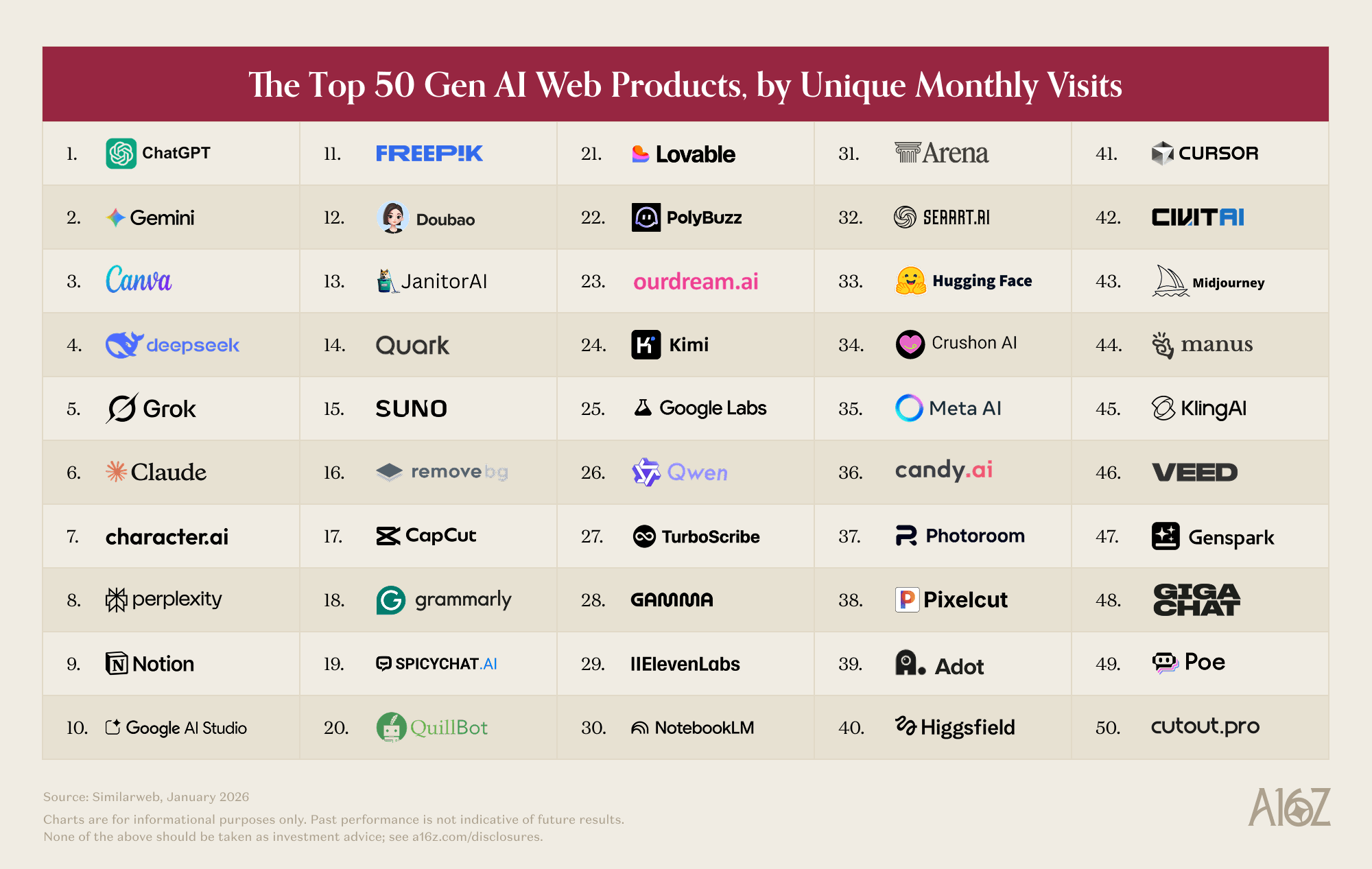
The Top 50 Gen AI Web Apps (source: a16z)
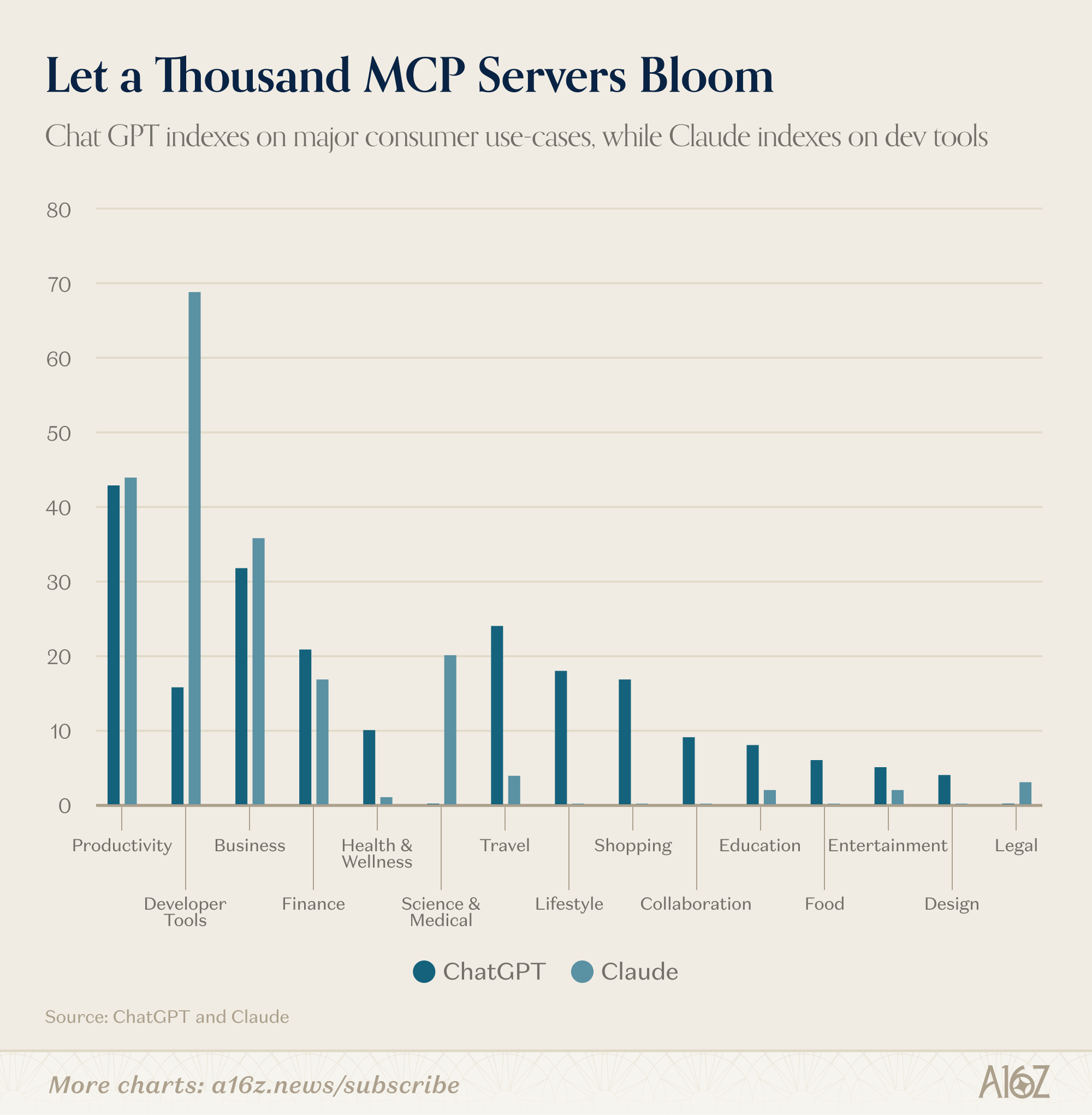
Platform divergence: only 11% overlap between ChatGPT and Claude app stores (source: a16z)
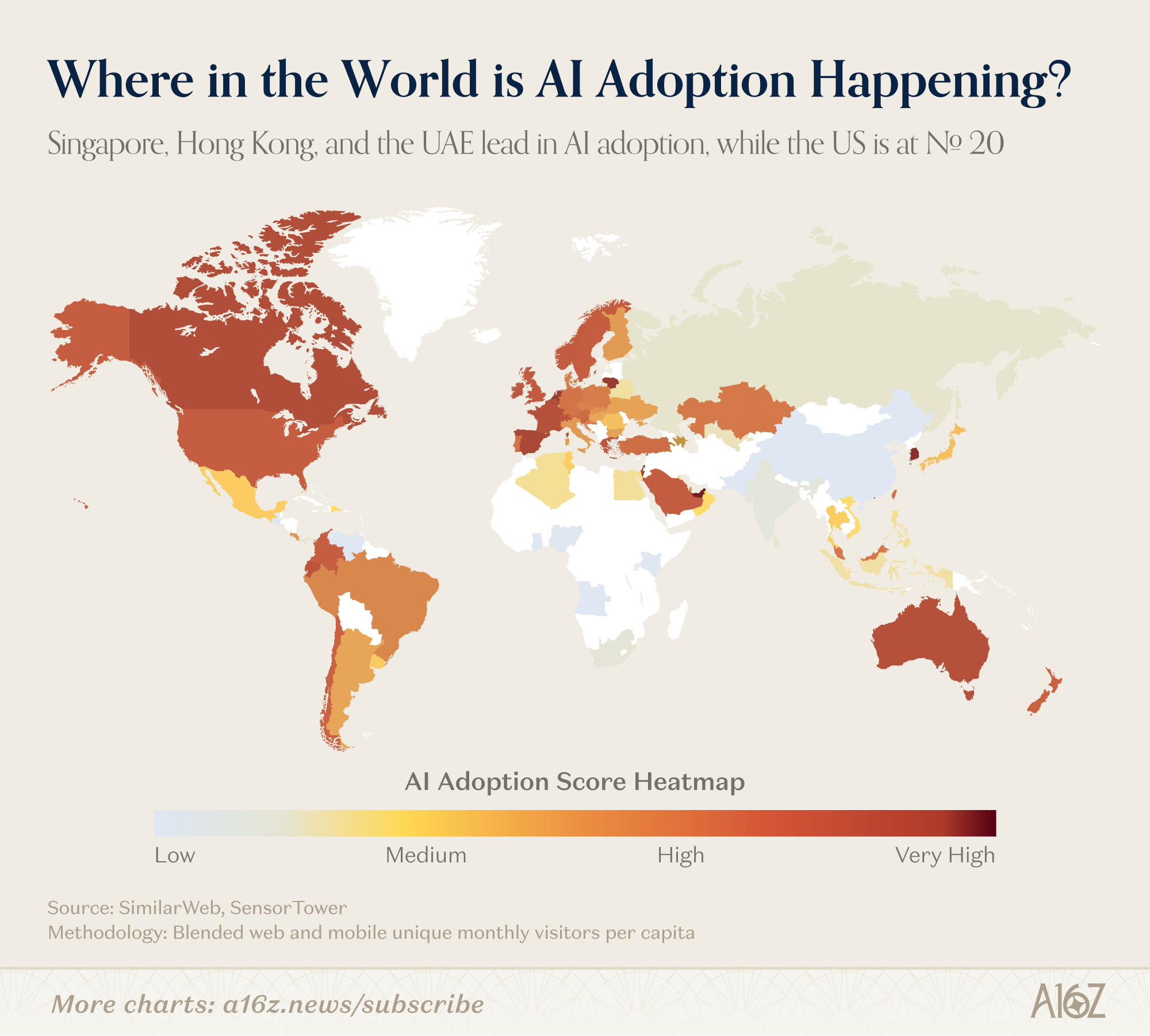
Per-capita AI adoption: Singapore #1, US at #20 (source: a16z)
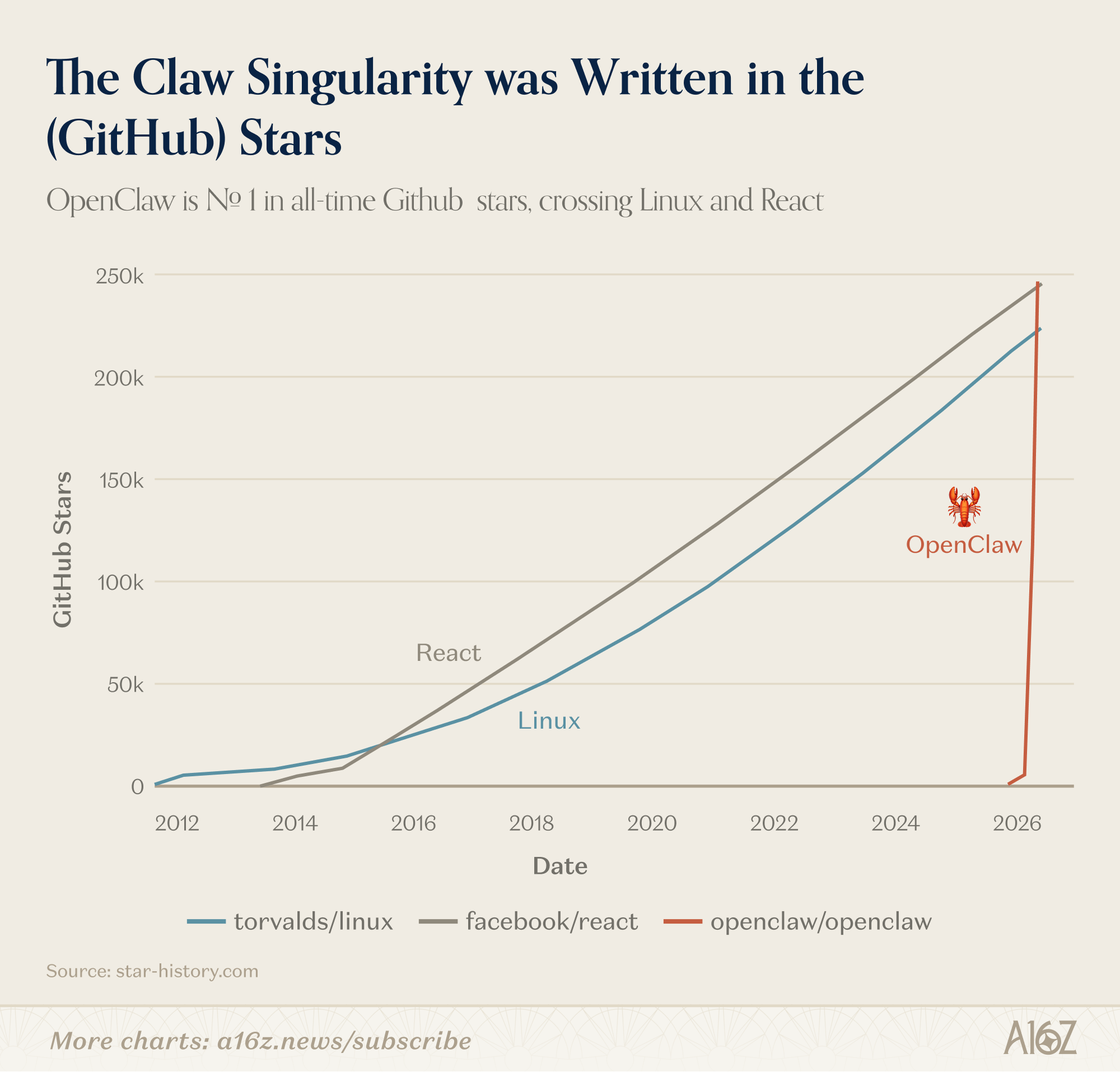
OpenClaw: more GitHub stars than React and Linux (source: a16z)
1. We're still so early
ChatGPT has 900M weekly active users. That sounds massive, but that's only ~10% of the global population. The ceiling is far, far away.
"ChatGPT is by far the biggest global AI product and still only 10% of the global population is using it on a weekly active basis. So there's like a lot more to come."
2. The scale gap is staggering, but the platform wars are getting real
The orders of magnitude between players are wild: ChatGPT is 2.7x bigger than Gemini on web, 2.5x on mobile. But against Claude? Nearly 30x bigger on web and 80x on mobile. As Sam Altman pointed out: more people use ChatGPT's free version in Texas alone than Claude has users globally.
Yet the race isn't just about size. It's about positioning. ChatGPT, Claude, and Gemini are no longer competing on the same axis. ChatGPT is going broad (consumer marketplace, travel, nutrition). Claude is going deep (pro tools, financial data, developer infra). Gemini is betting on creative/multimodal. Only 11% overlap in their app stores. This isn't winner-take-all: it's market segmentation.
"Claude has really doubled down on prosumer with things like co-work, Claude Code, Claude in Excel and PowerPoint. [...] ChatGPT is really doubling down on consumer marketplaces, travel, nutrition, consumer finance."
3. Agents have arrived
OpenClaw went from a solo project to more GitHub stars than React and Linux, then got acquired by OpenAI. Manus hit $200M ARR in ~9 months before being acquired by Meta for $2B. These aren't demos anymore.
"I think ultimately every AI company and then every tech company is going to be an agentic company because that's just where the models are headed."
4. The geography of AI is surprising
The highest per-capita AI adoption? Singapore, Hong Kong, UAE, South Korea. The US is #20. Cultural trust in AI varies wildly: 32% in the US vs. 70%+ in top-adopting countries. Russia has quietly built its own parallel AI ecosystem.
5. Creative tools are being rebundled
Standalone image generators are declining (Midjourney dropped from top 10 to #46). The base models are good enough now. What's defensible? Music (Suno), voice (ElevenLabs), and video, where Chinese models are currently leading.
"The Chinese models are so good because they can train on any data. Kling 2 is kind of head and shoulders above what the US companies have thus far been able to do."
6. The future is ambient
The most interesting AI products are leaving the chat window: browsers (Comet, Atlas), desktop apps (Cursor, Granola), voice tools.
"Any product that you start to use 2 years from now, if it doesn't immediately feel like it knows you, it will feel broken."
We're watching software get restructured in real time.
Get the next post by email
One email per post, written by me, nothing else. Unsubscribe in one click.
Product engineer at Teton in Copenhagen, EPFL graduate, co-founder of GirlsCodeToo. I write about AI, product engineering and digital health, and ride a lot.